A healthcare recruitment agency places nurses, doctors, technologists and other professionals with hospitals in India and abroad. They wanted software that finds the right people fast, and that their staff can trust.
One shared list of skills
Candidates and jobs point at the same list: profession, then specialty, then skill. We filled it with 10 professions, 48 specialties, 43 skills, 25 qualifications and 20 licensing authorities across India, the Gulf, the UK, Ireland, Malta and Singapore. Each item has synonyms, so a CV that says “Intensive Care” still counts as ICU.
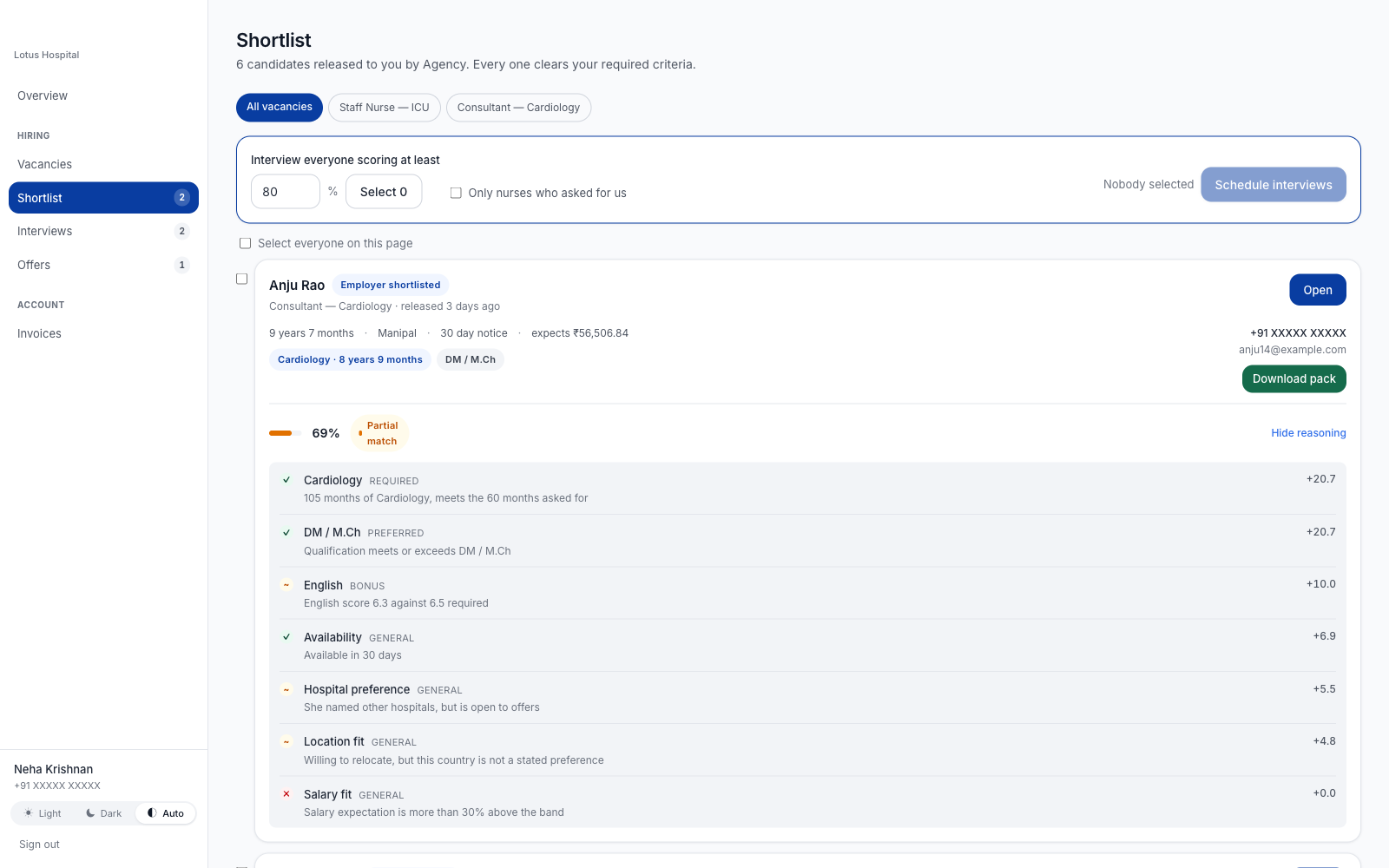
Matches that explain themselves
Every job requirement is a row: what it is, how much it matters (required, preferred or bonus), and its weight. Matching runs in two steps. First, anyone who misses a required item is left out, and every reason is kept, so staff can answer “why is this list empty?”. Then everyone else gets a score, and each part of the score has a written reason:
87% — 5 years of ICU ✓, ventilator at 5/5 ✓, licence verified with 847 days validity ✓, would need to relocate ✗
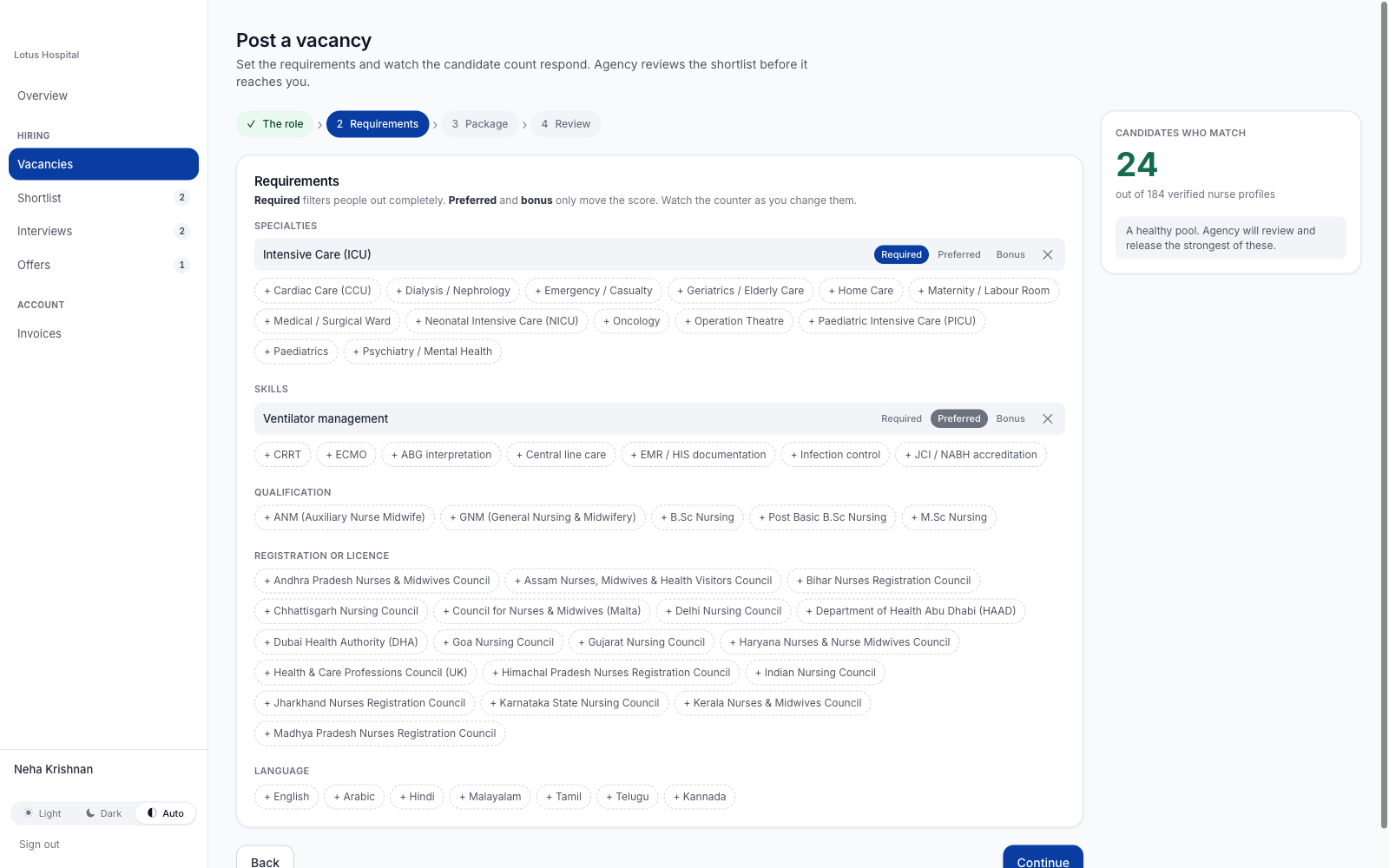
The job wizard shows what each requirement costs
As an employer adds requirements, a live counter shows how many candidates are left. In the demo data it moves like this:
| Requirements | Candidates |
|---|---|
| Nurses, no requirements | 164 |
| + ICU required | 19 |
| + three years of ICU | 10 |
| + ECMO required | 4 |
| ECMO relaxed to preferred | 10 |
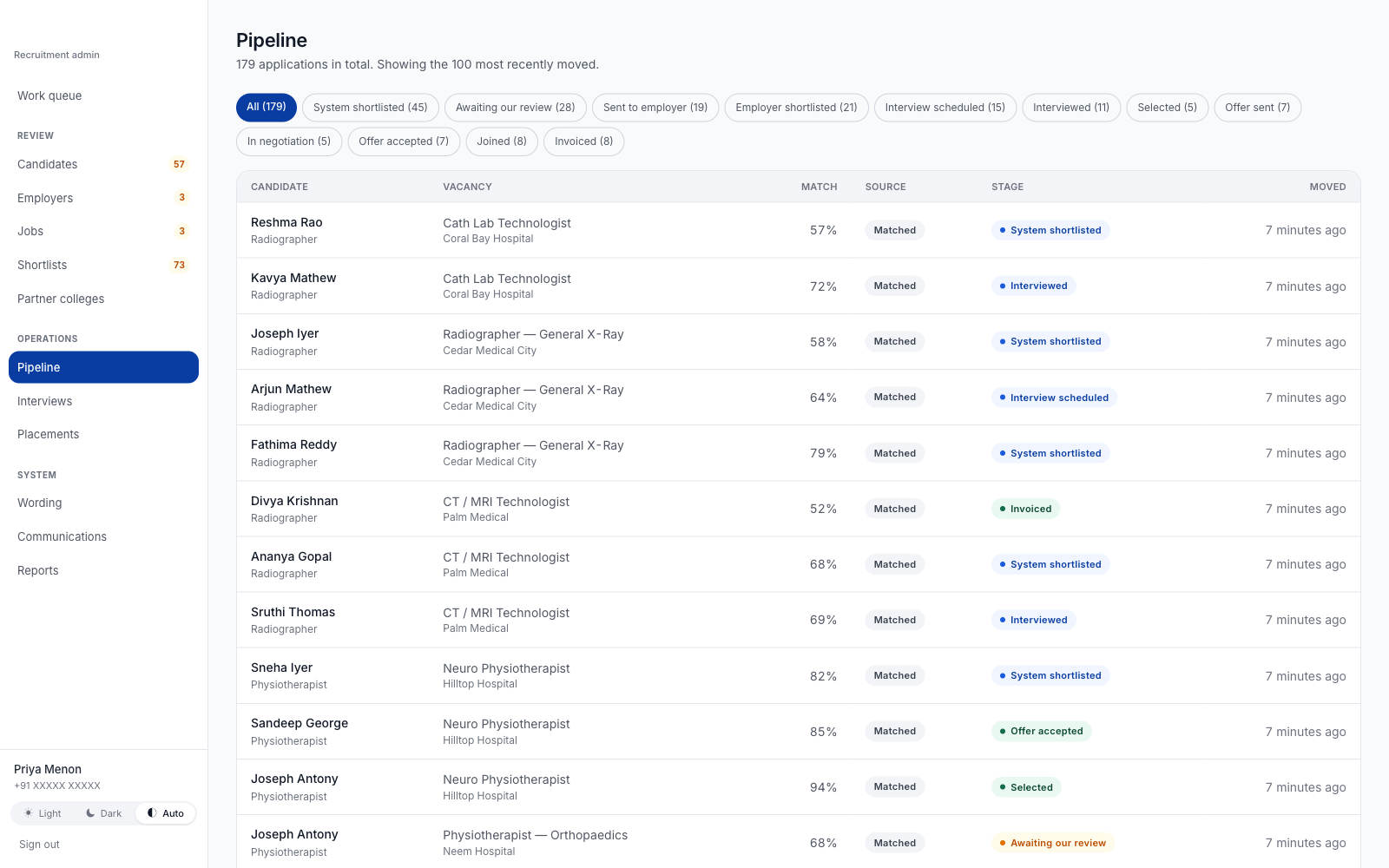
One flow from application to invoice
An application moves through 16 stages, from “new” to “joined”, “invoiced” and “closed”, plus 3 ways out. The candidate’s view, the employer’s board, the staff queue and the invoice all read from that one flow. The buttons on screen are made from the same table that the server checks, so a button you can see is always an action you are allowed to take.
There are four portals, for candidates, employers, agency staff and interviewers, with nine staff roles and a six-part score card for interviews.